Red Roses vs Pink Roses vs White Roses: Which One to Send?
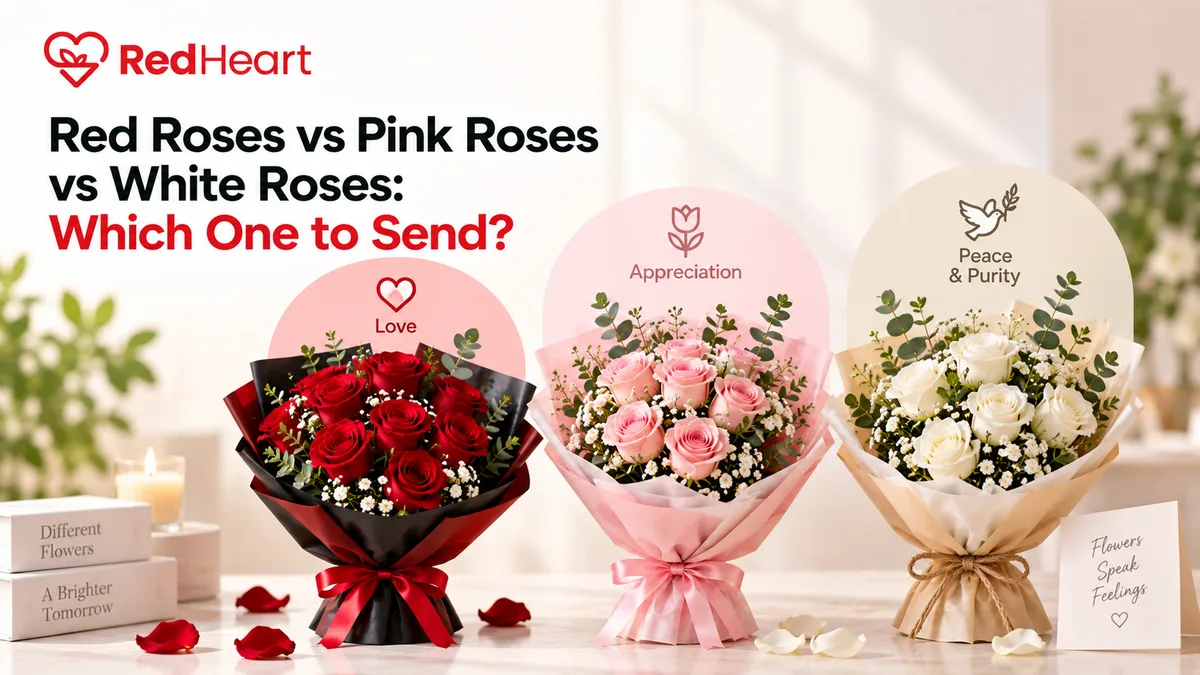
Table of Contents
- Red Roses: Romantic Love, Established Relationships
- Pink Roses: Warmth, Appreciation, and Softer Affection
- White Roses: Purity, Respect, and New Beginnings
- Mixing Colors Instead of Choosing One
- A Quick Way to Decide
- Is it appropriate to send red roses to someone who isn't a romantic partner?
- What do pink roses mean compared to red roses?
- Are white roses appropriate for a wedding gift?
- Can I mix rose colors in one bouquet?
Rose color isn't just an aesthetic choice — it carries enough of an established meaning in gifting culture that picking the wrong one can send a slightly different message than the one you intended. It doesn't need to be treated as a strict rulebook, but knowing the general associations helps avoid an awkward mismatch, especially for recipients who do read into these things.
Red Roses: Romantic Love, Established Relationships
Red is the default rose color for a reason — it's the clearest, least ambiguous way to signal romantic love. This makes it the right choice for partners, especially in established relationships: anniversaries, Valentine's Day, or any occasion where the romantic message is exactly what you want to convey.
It's worth being a little more careful with red roses outside a romantic context. Sending them to a friend, colleague, or family member can occasionally read as more intense than intended, simply because red carries such a strong romantic association in most gifting culture. If the relationship isn't romantic, a different color usually communicates the sentiment more accurately.
Pink Roses: Warmth, Appreciation, and Softer Affection
Pink roses cover more emotional range than red does. Deeper pink tones lean romantic, similar to red but softer — a common choice for newer relationships where red might feel too strong, too soon. Lighter pink shades shift toward gratitude, admiration, and general warmth, which makes them a strong fit for non-romantic recipients: mothers, close friends, or anyone you want to thank or celebrate without a romantic undertone.
This is part of why pink carnations (a related but distinct flower with a similar color logic) are such a common choice specifically for mothers — the color communicates warmth and appreciation without any romantic ambiguity.
White Roses: Purity, Respect, and New Beginnings
White roses carry a different register entirely — associated with purity, respect, and new beginnings rather than romantic passion. This makes them a strong fit for weddings (they're among the most common wedding gift flowers), for a respectful gesture toward parents or elders, or for any occasion centered on a fresh start rather than an existing romantic bond.
White roses are also a safer choice than red for more formal or professional gifting contexts, where a romantic color would be inappropriate but you still want to convey something elegant and considered.
Mixing Colors Instead of Choosing One
A mixed bouquet — combining red, pink, and white, or pairing one dominant color with accent stems of another — is a practical way to soften a strong single-color message or to add visual depth without committing entirely to one meaning. This works particularly well for occasions that don't fit neatly into one category: a birthday for someone you're close to but not romantically involved with, for instance, where you want warmth without ambiguity.
A Quick Way to Decide
- Romantic partner, established relationship → red
- New relationship, or wanting warmth without full romantic intensity → deeper pink
- Mother, close friend, general appreciation or thank-you → lighter pink
- Wedding gift, respectful gesture, new beginning → white
- Uncertain, or the occasion doesn't fit one category cleanly → a mixed bouquet